
delivering incredible joy
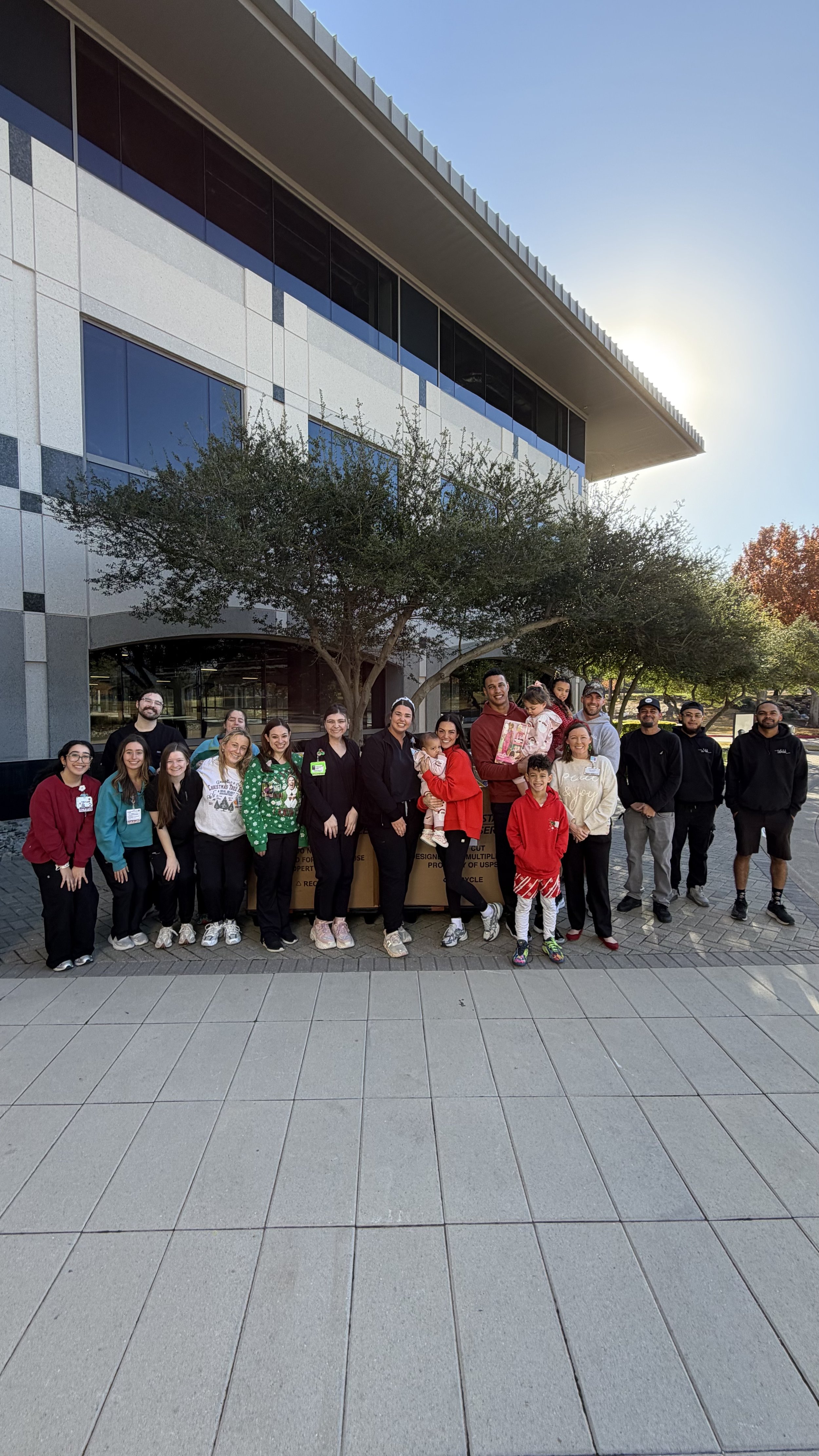
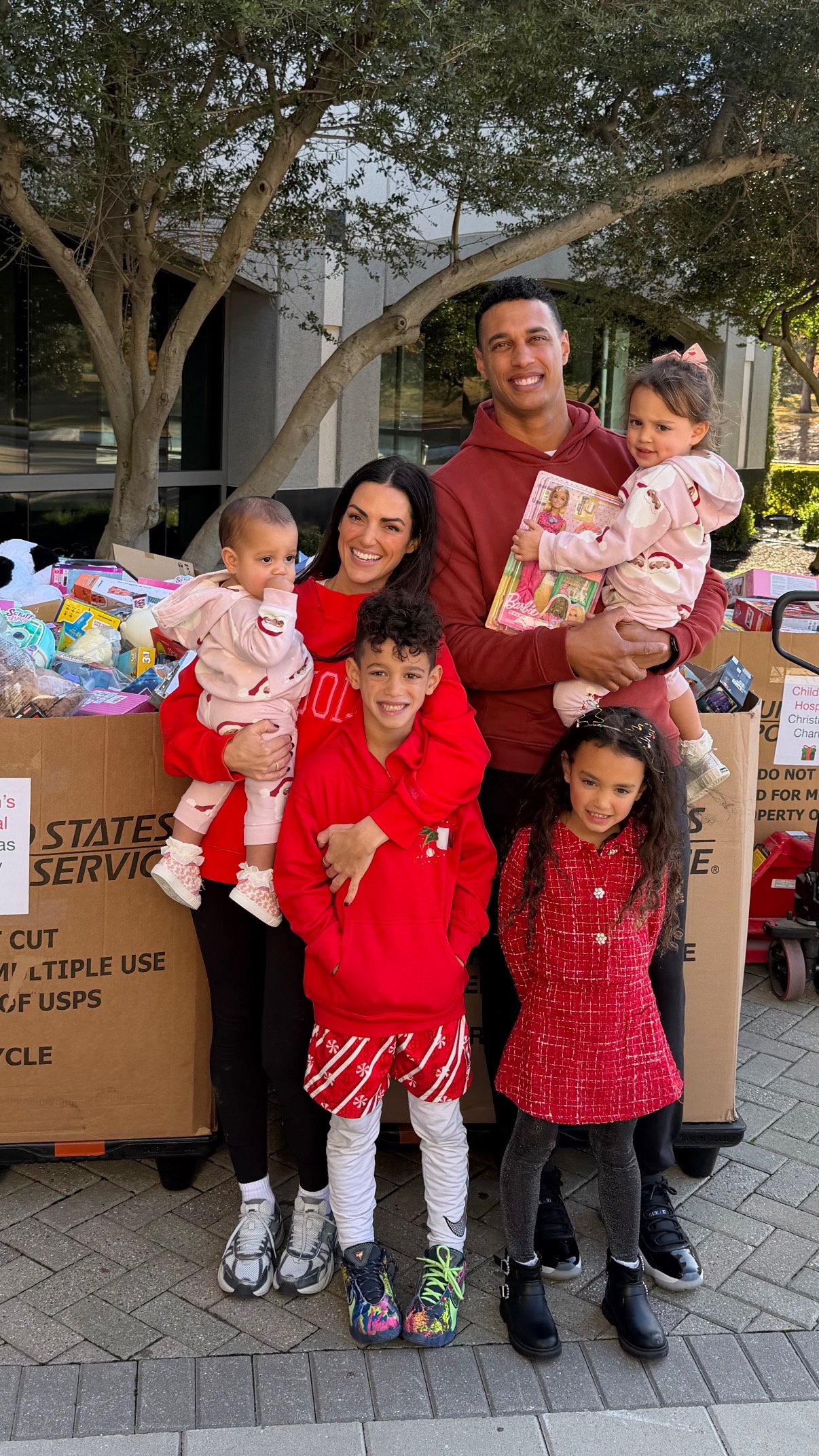
Influencer Madi Nelson and her husband, David, rallied their online community last holiday season to bring a big check and thousands of donated toys to Children’s Health℠ patients.
By the time Madi and David Nelson arrived at Children’s Health with a donation to support the hospital’s greatest needs and an 18-wheeler packed with thousands of toys, the generosity behind the moment had been building for weeks.
Inside were stuffed animals, Hot Wheels cars, LEGO sets, games and craft kits chosen with remarkable care — not by one family, but by an online community of people who had rallied behind Madi’s call to give, deciding that children spending the holidays in the hospital needed a moment of joy.
For Madi and David, seeing it all come together was emotional. As the family unloaded the goodies into big red carts outside the hospital's entrance, team members sorted through the mountain of toys.
“They would look at the toys and think of certain children. They’d pick one up and say something like ‘oh so-and-so would love this,’” Madi said. “That’s a moment that has stayed with us.”
For Madi and David, the personalization was a glimpse into what makes Children’s Health a special resource in the community: the understanding that care is not only about medicine, treatment plans and hospital rooms. Care is about joy, comfort and childhood.
“Children’s Health has made it about the people, about the kids and about the families you serve. And that's what we want to be aligned with — people who truly see people where they are,” David said. “It’s not just, ‘we’re going to treat what’s going on with you,’ but rather, ‘we’re going to take care of you fully.’”
That belief is one reason their family felt drawn to support Children’s Health.
‘We want that to be ingrained in the DNA of our family’
Madi and David’s story of giving starts years before that toy drop-off.
Long before they were raising four children in North Texas, the couple met while serving in Haiti, where they were involved in work supporting vulnerable children and families. There, they noticed a shared instinct to move toward people in hard places — and a shared belief that service should be part of everyday life.
Years later, that commitment still shapes the way they live.
“We want that to be ingrained in the DNA of our family,” David said. “A big core value of ours is to give back and to serve those who are a little less fortunate than us.”
That value is reflected in their business, Shop Talulah, which has become not only a successful brand but also a platform for generosity. Over the years, they have used it to support causes close to their hearts, rallying their online community around families and needs that deserve attention and care.
When they chose to support Children’s Health, the need was personal.
Like many parents, Madi and David had visited the hospital for the kinds of emergencies like a broken finger or dehydration that can turn an ordinary day upside down.
But what stood out to them wasn’t only the expertise of the care teams but how the atmosphere placed children at the center.
The bright colors. The child-friendly spaces. The playrooms and toys after a poke. The details designed to make a difficult experience feel less intimidating for kids and families.
“They are so intentional about every little detail,” Madi said.
That kind of care carried even more weight because of what their family has experienced outside the hospital walls.
For nearly 15 years, Madi’s father has been battling cancer — a journey that has deeply shaped the way they understand illness, resilience and the emotional toll of caregiving.
“My dad is a grown man,” Madi said. “He is the biggest, strongest guy in the world, and it has been so difficult for our family. So to think about parents walking through that with young children — we just can’t even imagine.”
During one visit to Children’s Health, that reality hit especially hard.
The couple remembers noticing another family nearby — parents who looked exhausted, familiar with the cafeteria and settled into a routine. In that moment, they were struck by the contrast.
Their family would be leaving.
But this other family might not.
“These are supposed to be the best years of kids’ lives,” David said. “They should be outside playing and going to baseball practice and just being kids.”
What’s behind the toy drive
That perspective stayed with them — and helped inspire the family’s holiday toy drive.
Thousands of people responded to Madi’s “Giving Tuesday” call on Instagram, purchasing toys to help brighten the holidays for children receiving care.
And many of them shared why.
Some messages came from people honoring children or grandchildren they had lost. Others wanted to help another family feel seen in a difficult season.
“There was a story behind each toy,” Madi said.
For Madi and David, that made the donation feel like more than a collection of gifts. The giving felt like a community showing up with compassion.
“It was a culmination of thousands of people coming together to make this possible,” David said.
In addition to the toy drive, the couple also made an unrestricted financial gift to support the hospital system’s greatest needs — a choice they made intentionally.
With their own nonprofit background, they understand that meaningful care is sustained not only by visible acts of generosity, but by the less visible support that keeps an organization strong, nimble and responsive to what families need most.
“There’s so much more that powers care, that powers service,” David said.
For them, giving to Children’s Health is about helping make those incredible moments of care possible — from lifesaving research discoveries to cuddles with loveable therapy dogs.
And more recently, to a transformative period of growth as Children’s Health builds the new Dallas pediatric campus alongside UT Southwestern to expand access to specialized care.
But giving back also is a moment of teaching. Each year, Madi and David’s kids help with the toy drive, making it one of the family’s most meaningful holiday traditions.
“I don’t want our children to go to a hospital and feel scared,” Madi said. “I want them to embrace it and to try to find joy in it with whoever they’re with.”